Signs of a Slab Leak: 11 Warning Signs and How to Confirm One
In a slab-on-grade home, the house sits on a concrete slab, and the water supply lines can run underneath it or through it. When one of those buried lines develops a leak, the water can soak into the soil and the floor above, out of sight. That is why a slab leak can show up on the water bill before you ever see water.
This guide covers the warning signs, three tests you can do yourself to confirm a leak, the things that can look like a slab leak but are not, and what to do next.
Why slab leaks happen in South Florida homes
A slab leak can be a small hole, such as a pinhole, in a pressurized water line under or inside the foundation. Possible causes include:
- Abrasion: pipes can vibrate slightly when water flows. Where a line rubs against concrete, gravel or another pipe, the wall can wear thin over many years.
- Thermal expansion: hot water lines expand and contract as hot water runs through them, which can add wear at contact points.
- Water chemistry: over time, the water flowing through copper lines can slowly thin the pipe wall from the inside.
- Soil movement: settling or shifting soil under a slab can put stress on pipes and joints.
- Age and installation: older lines, kinked pipes or damage during construction can all lead to leaks years later.
11 signs of a slab leak
One sign on its own is not proof, but two or three together are worth checking. They fall into four groups.
Money and meter signs
- Your water bill jumps for no reason. Compare the gallons used, not just the dollar amount, across the last few months. Usage that climbs while your habits stay the same can be an early clue.
- The water meter moves when nothing is on. With every tap, toilet and appliance off, the meter's leak indicator should be still.
- Your energy bill rises too. A hot water leak can make the water heater keep refilling and reheating, so the electric or gas bill can creep up along with the water bill.
Floor signs
- A warm spot on the floor. A leaking hot water line can warm the tile or wood above it. You may notice it barefoot.
- Damp carpet, swollen baseboards or dark grout. Water can wick up through the slab and soak flooring from below.
- New cracks in tile or the slab. Water moving soil under a slab can contribute to cracking. On its own, a crack is not proof of a leak.
- A musty smell that will not go away. Ongoing moisture under floors and inside walls can encourage mildew and mold.
Sound signs
- The sound of running water when everything is off. A faint hiss or trickle, which may be easier to hear at night or near the water heater.
Water system signs
- Lower water pressure. Showers and taps can feel weaker if some of the water is escaping before it reaches them.
- The water heater runs constantly. You hear it cycling even when no one is using hot water.
- Hot water runs out sooner. Heated water may be escaping before it reaches your shower.
Noticing two or more of these? Call (561) 566-7338 to get connected with a Delray Beach leak detection plumber.
Call (561) 566-7338Three tests to confirm a leak yourself
These tests need no special tools, though the meter test involves waiting an hour. They can help show whether water is escaping, and roughly where.
Test 1: The water meter test
- Turn off every tap, shower, toilet, irrigation system, ice maker and water-using appliance.
- Find your water meter. It may be in a box near the street or sidewalk. Lift the lid carefully.
- Look for the small leak indicator, such as a triangle, star or small dial. If it is turning, water may be flowing somewhere.
- Write down the full meter reading. Wait at least one hour without using any water, then read it again.
- If the reading changed with no water in use, you may have a leak somewhere between the meter and your fixtures.
Test 2: Inside or outside?
With the meter still moving, close the main shut-off valve where the water line enters your house. If the meter stops, the leak is likely inside the house or under the slab. If it keeps moving, the leak may be on the yard line between the meter and the house.
Test 3: Hot side or cold side?
Open the main valve again and close the cold water supply valve on top of your water heater. If the meter stops moving, the leak is likely on the hot water side, which is consistent with a hot water slab leak. If it keeps moving, the leak is more likely on the cold side.
Rule these out first: possible false alarms
Several everyday problems can move the meter or raise the bill and may be simpler to fix. Check them before assuming the worst:
- Running toilets: put a few drops of food coloring in the toilet tank and wait 10 minutes without flushing, as EPA WaterSense suggests. If color appears in the bowl, the toilet is leaking, and a worn flapper is a likely cause.
- Irrigation: a broken sprinkler head or stuck valve can waste a lot of water. Look for soggy patches or water running onto the sidewalk.
- Pool auto-fill: if your pool has an automatic fill valve, a pool leak or evaporation can keep it topping up. Turn the auto-fill off during the meter test.
- Water softeners and filters: some systems flush or regenerate on a schedule. Pause them during testing.
- Fridge and ice maker lines: check behind the fridge for damp flooring.
A warm floor can also come from sun through a window, a heating duct or an appliance nearby. If the warm spot moves with the sun, it is probably not a leak.
What to do if you think you have a slab leak
- Limit the damage. If water is visible or spreading, close the main shut-off valve. For a suspected hot side leak, close the water heater's cold supply valve.
- Document it. Take photos of damp areas, note your meter readings and keep recent water bills. This helps the plumber and any insurance conversation.
- Check your policy. Homeowners policies differ in how they treat the cost of accessing a leak, the pipe repair and any resulting water damage. Read your policy or call your insurer before work starts.
- Get professional leak detection. Common leak detection methods include pressure testing, line tracing, acoustic listening and thermal imaging, which can help pinpoint the leak before anything is opened. Ask the plumber which methods they use.
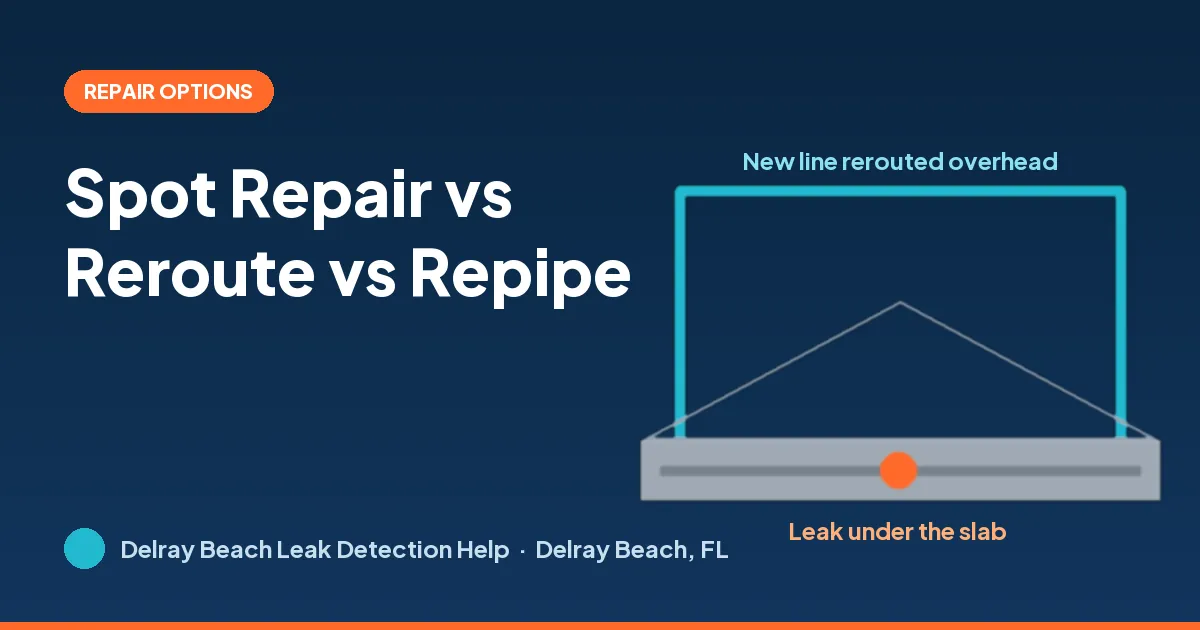
- Compare repair options. Once the leak is located, you can choose between a spot repair, a reroute or a repipe. Our guide to slab leak repair options explains each.
What not to do
- Do not start breaking up the floor to look for it. Water can travel under a slab, so the damp spot is not always above the leak.
- Do not ignore it. A leak that runs for months wastes water and money, and keeps soaking the soil and flooring.
- Do not rely on a pipe-sealing additive as a fix for a leak you have not located and assessed.
Frequently asked questions
How long can a slab leak go unnoticed?
It can go unnoticed for months. The water can soak into the soil under the slab instead of pooling where you can see it, so a rising water bill can be the first clue.
Can a slab leak fix itself?
No. A leak in a pressurized line keeps running until the pipe is repaired or the line is bypassed.
Is a slab leak an emergency?
If water is coming up through the floor or near electrical outlets, treat it as urgent and shut off the main valve. A slow leak found on the meter is less urgent but should still be located soon.
Can I find the exact spot myself?
The tests above can help confirm that a leak exists and narrow it down, but pinpointing a leak under concrete calls for specialized equipment.
This guide is general information, not professional advice for your home. Delray Beach Leak Detection Help is a referral service that connects callers with independent local plumbers.