Slab Leak Repair Options: Spot Repair vs Reroute vs Repipe
Finding a slab leak is one part of the job. The other is deciding how to fix it, and there may be more than one reasonable answer. Ask the plumber to explain the options for your home. This guide walks through three approaches so you can follow the conversation and ask the right questions.
Before choosing: get the leak located accurately
Each option starts with knowing where the leak is and which line it is on. Professional slab leak detection can use pressure testing to confirm the leak and the side (hot or cold), then line tracing, acoustic listening and thermal imaging to mark the spot. Without that, you are choosing a repair blind.
Option 1: Direct spot repair
In a spot repair, the floor may be opened at the leak location, the pipe is dug out, the damaged section is cut out and new pipe is joined in. The hole is then backfilled and the concrete patched so flooring can go back down.
- Can suit: a leak in one spot when the rest of the line is in good condition and the flooring above is easy to replace or already being replaced.
- Watch out for: breaking and replacing tile, stone or wood, matching flooring afterwards, and the mess of working inside the home.
- Keep in mind: a spot repair fixes one leak. If the pipe is worn elsewhere, another leak can appear later in a different spot.
Option 2: Reroute the line
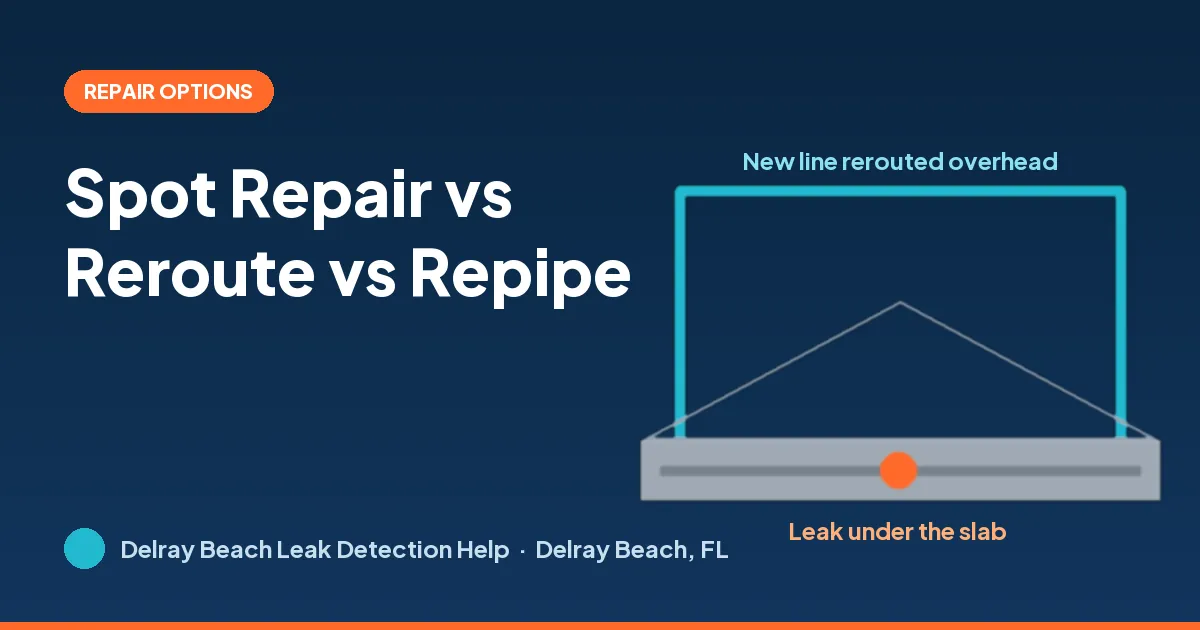
Instead of going through the slab, a new section of line is run above it, for example through walls, the attic or the ceiling, and disconnects the leaking section under the floor. If your home has an accessible attic, that can make rerouting more practical.
- Can suit: a leak under expensive or hard-to-match flooring, under cabinets or in a hard-to-reach spot, or when you want to stop relying on that buried section altogether.
- Watch out for: small openings in drywall that need patching and painting afterwards, and the length of the new run.
- Keep in mind: rerouting replaces only the section that is bypassed. Other buried lines stay in service.
Option 3: Repipe
A repipe replaces most or all of the home's water supply lines, for example by running new lines overhead and abandoning the old buried system. It is the biggest job of the three.
- Can suit: a home that has had more than one slab leak, where testing shows wear in several places, or where the pipes are near the end of their life.
- Watch out for: a larger project, more wall openings and a longer timeline.
- Keep in mind: because the old buried lines are no longer in use, it can end repeated repairs on them.
Side-by-side comparison
| Spot repair | Reroute | Repipe | |
|---|---|---|---|
| Breaks the floor? | Yes, at the leak | No, the new line runs above the slab | No, new lines run above the slab |
| Fixes | One leak | One section of line | Most or all supply lines |
| Scope | One spot | One section of line | Whole supply system |
| Can suit | Single leak, rest of line sound | Leak under costly floors or cabinets | Repeated leaks or aging pipes |
| New leaks elsewhere | Still possible in other lines | Still possible in other lines | Old buried lines no longer in use |
Found a slab leak and weighing your options? Call (561) 566-7338 to get connected with a Delray Beach plumber who can explain them for your home.
Call (561) 566-7338Factors that decide the right option
- Where the leak is: under a closet floor is a very different job from under a kitchen island.
- What is above it: replacing standard tile can cost less than matching marble or hardwood.
- Leak history: a first leak in a sound line points one way; a third leak points another.
- Pipe condition: pressure tests and inspection can show whether the rest of the line is worth keeping.
- Access above the slab: an accessible attic or ceiling space can make rerouting easier.
- Insurance: policies can treat access, pipe repair and resulting damage differently. Check yours before choosing.
Questions to ask your plumber
- Which line is leaking, hot or cold, and how confident are you of the exact location?
- Which repair options suit my home, and why would you recommend one over the others?
- What will be opened (floor, walls, ceiling), and who handles patching afterwards?
- How will you confirm the repair holds? Will you pressure-test after the work?
- What warranty comes with the work, and what does it cover?
- Is the plumber licensed, and are any permits needed for this work?
Frequently asked questions
Is rerouting better than a spot repair?
Neither is always better. A spot repair is direct for a single leak in a sound line. A reroute can avoid opening the floor and takes the problem section out of use. The right choice depends on the leak location, the flooring and the pipe condition.
Do I need a repipe after one slab leak?
Not necessarily. A single leak can be repaired or rerouted. A repipe is something to consider after repeated leaks or when testing shows wider wear.
How long does slab leak repair take?
It depends on the method and the home. Ask for a time estimate once the leak is located.
Will I need to leave my home during the repair?
Ask the plumber how the work will be scheduled. Water is likely to be off for part of the work.
This guide is general information, not professional advice for your home. Delray Beach Leak Detection Help is a referral service that connects callers with independent local plumbers.