Why slab leaks happen
In a home built slab-on-grade, water supply lines can run underneath or inside the concrete foundation. Over time, pipe wear, water chemistry, shifting soil and pipes rubbing against concrete can open pinhole leaks. Because the leak is under the floor, the first clue can be the water bill rather than a puddle.
How leak detection works
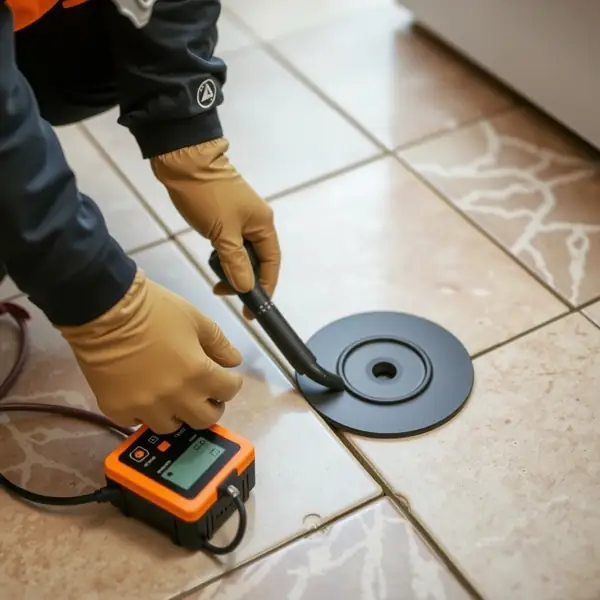
A leak detection plumber can start by confirming there is a leak, for example by checking the water meter and pressure-testing the hot and cold sides of the system separately. Locating can then involve tracing where the lines run under the slab, listening for the leak with an acoustic ground microphone and looking for warm water under the floor with a thermal camera. The aim is a marked spot on the floor rather than guesswork.
Why non-invasive matters
Breaking up a floor in the wrong place can be costly and messy. Accurate locating can help keep the opening small, or show that rerouting the line is a better option. Either way, you can know what you are dealing with before any work starts.
What happens when you call
- 1
Call and describe the problem
Describe what you are noticing. Your call is connected with a leak detection plumber who serves Delray Beach.
- 2
Confirm the leak
A plumber may check the meter and pressure-test the lines to confirm a leak and which side, hot or cold, it is on.
- 3
Pinpoint the location
Common methods such as line tracing, acoustic listening and thermal imaging can help narrow the leak down to a marked spot.
- 4
Review your repair options
Ask the plumber to explain spot repair versus reroute so you can choose with the facts in front of you.